
This is my first post since February – I haven’t gone that long without posting since I started this blog in January 2009.
This is telling and highlights my general lack of excitement for the real estate business over the past few years.
Correction, the last 3+ years have flat out sucked.
Everyone in multifamily wanted to believe in a quick V-shaped recovery and some sort of mythical return to the post-GFC goldilocks period, but no one really thought that would happen.
I even started to question whether or not the multifamily business, where I’ve spent my entire career, was a good business. It is.
It’s actually a great business, and slowly but surely, things are starting to change. We’re beginning to revert to how the business was always meant to operate.
The surest sign of this reversion is the number of post-mortems that have been published.
Here are a few of the best.
- Housing + Markets — The Apartment Trade Is Over. Back to Apartment Investing.
- CRE Analyst — It Sounded Like a Good Idea at the Time (paywall)
- Reset Basis – Mmmmm…. Great Vintage
- The Promote Newsletter — Diary of a MF Operator: What Happens When Things Stop Being Easy (Insider)
- CRE Analyst – You’re Probably a Zoo Bear (paywall)
The common thread is acceptance. The 2010–2022 period was the anomaly, not the norm we're going to revert to.
As CRE Analyst put it, “before the money got easy, real estate was a hunt. It was a hyper-competitive, winner-take-most business where growth was never evenly distributed and most operators got eaten.”
We’re getting back to the hunt. Which is fun.
Starting in 2023, every value-add operator was making the same pitch to buy distressed high-quality assets at core-plus risk, which is a trade that never really materialized.
3+ years later and (most of) the market is finally realistic about the opportunity set in front of us.
Let’s dig in.
The Opportunity Set Is Becoming Real
The pricing reset has already happened. Cap rates have reverted and operating fundamentals have largely bottomed (Jay Parsons – Is Multifamily Finally Turning a Corner), meaning prices have generally bottomed as well.
Housing + Markets lays out the simple math: apartment cap rates went from ~3% in mid-2022 to ~5% by the end of 2025. That move alone erased something like 30% of value from peak basis. On top of that, operating fundamentals deteriorated, dragging values down further.
With NOIs down ~10%-15%+, many deals in highly supplied submarkets are down ~50% in value, which is mind-blowing for a historically stable asset class and highlights just how crazy the 2021-22 peak was.
Take, for example, this '90s commodity deal in Fort Myers, where operations have gotten crushed.
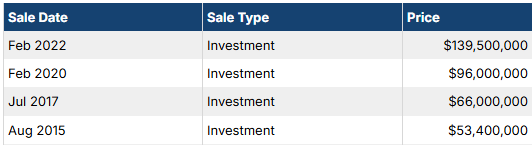
It’s worth ~$75M today, which is ~50% of the seller’s basis.
There are tons of similar stories out there.
So while the pricing reset has happened, it’s going to take time for deals to wind their way through the system, meaning these opportunities should surface over the next ~12-24 months.
The Forward Outlook Is (Generally) More Realistic
The multifamily “trade” is over — the tailwinds that powered the last cycle have all reversed: cap rate compression is gone, we’re unable to flood the system with credit to the same relative degree, demographic trends are less favorable, and the underbuilding we saw post-GFC is long gone.
We’re now in a normalized environment where deals have to cashflow and operators need to create real value to achieve value-add returns. It's an environment where a disciplined operator can actually win on sharp-shooting and flawless execution.
It’s taken longer than expected, but supply is being absorbed, deals are clearing, and owners/lenders/investors are accepting the reality.
The Unsophisticated Buyers Have Been Weeded Out of the Market
Real estate is not a zero-sum game, and I root for risk-takers to be rewarded, but in order to restart the cycle and bring us all down to reality, there have to be some losers.
The groups that grew fastest on high-leverage floating-rate debt and a view that trees can grow to the sky have largely exited the market or restructured (everyone loves a comeback).
Multifamily was never meant to generate 2.0x returns over 3 years and the market has to accept that.
There’s a lot of pain and it’s a horrible situation for many LPs, but the de-levering is vital to re-setting the cycle.
The Market Should Reward Sharp-Shooter Operators
With the glory days well behind us, the industry at the institutional level is now re-structuring around two mega-trends: scale and cheaper cost of capital.
The Promote's "hard mode" newsletter details these trends.
A series of acquisitions highlight the focus on scale. Sun Life's $350M acquisition of Bell Partners (70K units and $10B in AUM) which is being folded into the Canadian insurer's platform. Apollo acquired Bridge Investment Group ($50B AUM, 55K units). Toll Brothers sold its apartment platform to Kennedy Wilson. Lennar offloaded most of Quarterra to TPG. Bluerock and Preferred Apartment Communities both got absorbed into BREIT. Blackstone's LivCor is already at 150K+ units and pulling property management in-house.
These acquisitions are about scale, which leads to cost efficiencies that firms start to realize at 50K+ units and that become a moat at 150K+ units.
The capital story is just as important: LP capital demanding 17% net returns can't fund an asset class generating modest NOI growth. So the entire institutional multifamily market is targeting cheaper money such as insurance balance sheets, retail, 401(k) access, and perpetual vehicles.
For these firms, the math works when their cost of equity drops and they decrease expenses through centralized operations and real tech via massive scale.
This is great for institutional owners who are buying beta and letting compounding do its thing.
At the same time, I also think it’s great for sharp-shooter operators like us who are working like hell to find/create value.
This quote from the Promote says it better than I could:
“Scale is not the only path to winning. The market has always had room for the sniper shop: hyper-focused operators who know exactly which submarket they want to be in and why, and who are right more often than they are big. That model can still work. It just requires you to actually be a sniper and not merely a small fund with sniper aspirations.”
Being small is not the advantage — the advantage is being a hands-on owner/operator who knows their market inside and out.
Despite all the advantages the big guys have, I believe the local owner, with true skin in the game, is going to outwork and be more creative than the associate at Blackstone who is merely doing his job (no offense).
In fact, I’m betting my career on it.
It’s an Incredible Time to Be an Entrepreneur
(Almost) everyone gets into acquisitions to do their own deals one day. It's what makes this industry special. There’s a whole ecosystem of aspiring entrepreneurs working inside shops.
The problem with a 15-year bull market is that it never gave talented people a clear opportunity to jump.
Atlas was founded in 2010, and the firm would not have survived if it was founded in 2016, 2019, or god forbid 2020.
Timing was the key to our early success.
2026 feels like the first real window since the years after the GFC to start a firm.
Promote is cooked (sucks, but it’s true), it's the start of a new cycle, and tech/AI have collapsed startup costs and amplified talent.
It’s insane what a talented team of 2-4 people can do today.
The Anti-Institutional Advantage
This is the part that matters most to me, so I'll end here.
Atlas doesn’t sit inside a bank, an insurer, or a REIT. We aren't governed by risk limits, quarterly EPS targets, or a governance committee.
We don't have a CIO who needs the deal to be defensible to a board that's never visited the submarket.
Every structural feature that makes scale a moat also makes it a drag on decision-making.
Multifamily was always a get-rich-slow business, but for 15 years (my entire career) it was a trading asset.
It’s time to get back to basics and back to the hunt.
Let’s go!